
Defense Base Act War Hazards Rules for Contractors Hurt in Missile and Drone Attacks
Last updated September 25, 2026 · Reviewed by Elizabeth Estrada
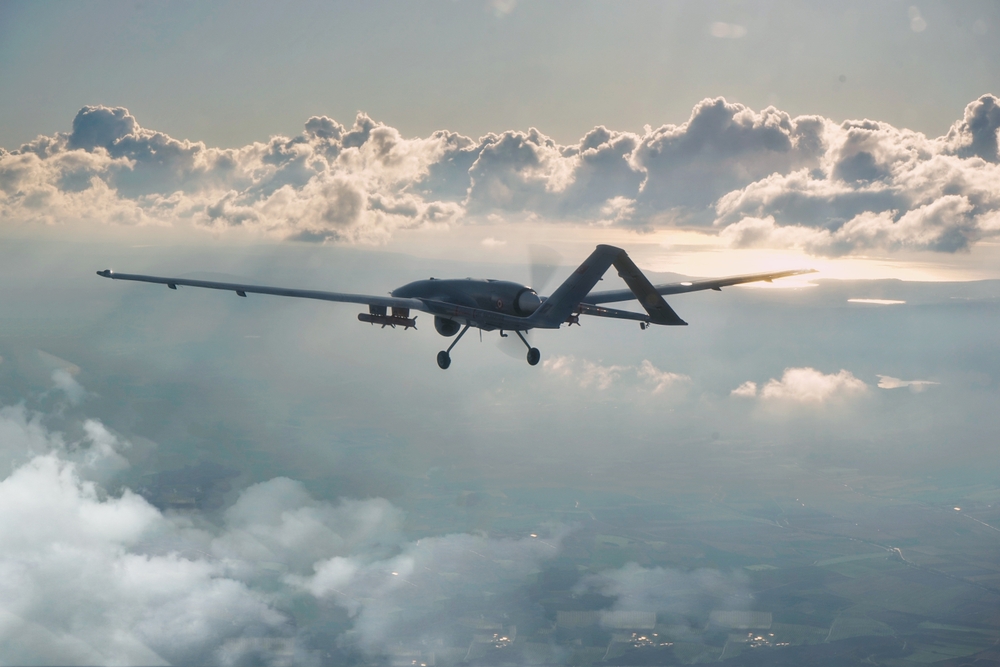
Defense Base Act war hazards rules determine who pays when a civilian contractor is injured in a missile or drone attack on an overseas base, and renewed strikes on bases hosting U.S. forces have put that question in front of contractors again. Stars and Stripes reported that on August 31, 2026, Iran said it had launched ballistic missiles and drones at bases hosting U.S. forces,  naming King Hussein and Al Azraq air bases in Jordan and Al Minhad Air Base in the United Arab Emirates. A U.S. official said there were no impacts at U.S. bases, and the UAE denied that Al Minhad was attacked. On September 9, Jordan’s military said it had engaged 20 ballistic missiles fired from Iran, and the Pentagon’s database of U.S. military casualties had listed 61 more Americans as wounded in action since the strikes resumed.
For a worker whose job is covered by the Defense Base Act, a claim for an attack injury is made against the employer’s insurance carrier like any other Defense Base Act claim. Benefits are set by the Longshore and Harbor Workers’ Compensation Act rules that 42 U.S.C. § 1651(a) applies to overseas contract work. The War Hazards Compensation Act, 42 U.S.C. §§ 1701 through 1717, governs a separate question, whether the federal government reimburses the carrier. At Friedman, Rodman & Frank, P.A., our Defense Base Act attorneys represent contractors on the claim itself, which is where an injured worker’s benefits come from.
What Counts as a War-Risk Hazard
A war-risk hazard is a hazard arising during a war or armed conflict from one of the sources listed in 42 U.S.C. § 1711(b), including the discharge of any missile and the use of any weapon or explosive by a hostile force or person. The definition covers an armed conflict involving the United States whether or not war was declared.
It also reaches a war or armed conflict between military forces of any origin in a country where the covered worker is serving, so the United States does not have to be one of the sides. Section 1711(c) defines a hostile force or person as a nation, a subject of a foreign nation, or anyone serving a foreign nation that is engaged in that kind of war or conflict.
Who Pays for Defense Base Act War Hazards Injuries
Section 1704(a) entitles an employer or carrier that pays benefits for an injury or death arising from a war-risk hazard to be reimbursed for all benefits paid or payable. That includes medical and hospital costs, funeral and burial expenses, and reasonable claims expense, paid from the compensation fund established under 5 U.S.C. § 8147. The carrier files its reimbursement claim with the Secretary of Labor. Section 1704(b) bars reimbursement where the carrier charged a premium that included an added charge for the war-risk hazard.
None of that reduces what the carrier owes the injured worker, since Section 1704 deals with money passing between the carrier and the government. Section 1704(a) does protect contractors in one practical way. It lets the Secretary pay benefits directly as they accrue, in place of reimbursement, and it provides that the insolvency of an employer or carrier does not affect a beneficiary’s right to receive those benefits directly from that fund.
When the War Hazards Act Pays a Contractor Directly
Section 1701(a) reaches a contractor’s employee covered by the Defense Base Act when no compensation is payable under the Defense Base Act for the injury or death. If the injury proximately results from a war-risk hazard, which in plain terms means the hazard caused it, benefits are paid from the federal fund as though the worker were a federal civil employee injured on duty. The statute applies whether or not the worker was actually on the job at the time.
Section 1701(d) carves out one group. A worker who lives at or near the place of employment, and is not living there solely because of the job, is excluded unless the injury happens in the course of employment.
Section 1701(b) treats a covered worker who is missing under circumstances supporting an inference that a hostile force or person caused the absence, or who is known to have been taken prisoner or hostage by a hostile force or person, as totally disabled for the purposes of that subsection. Benefits are credited to the worker’s account until the worker returns, or until death is established or can legally be presumed, and the Secretary may pay part of them to dependents living in the United States or its territories during the absence.
Starting a Claim After an Attack on a Base
A contractor hurt in one of these strikes should report the injury to the employer and keep every medical record from the first treatment onward, since the claim goes to the same Defense Base Act carrier as any other injury and the war hazards question is settled separately. Friedman, Rodman & Frank, P.A. represents civilian contractors injured on overseas government contracts, and we can look at which of these federal rules applies to your injury. Call (877) 448-8585 or contact our office for a free consultation about your Defense Base Act claim. There is no fee unless we recover for you.


About Post Author
